
As a parent, you want what’s best for your child’s health and development. When it comes to healthcare choices for kids, many families in Tyler are exploring pediatric chiropractic care as a gentle, drug-free approach to supporting their children’s growing bodies. At Flores Chiropractic here in Tyler, TX, we understand that parents often have questions—and sometimes concerns—about whether chiropractic care is appropriate for children. This guide will walk you through what pediatric chiropractic care actually involves, how it differs from adult care, and what you need to know to make an informed decision for your family.
What is pediatric chiropractic care? Pediatric chiropractic care is a specialized approach within the chiropractic profession that focuses on the evaluation and gentle adjustment of the spine and nervous system in infants, children, and adolescents. The techniques used are specifically modified for a child’s developing body, using no more pressure than you’d use to test the ripeness of a tomato for newborns and infants.
Table of Contents
- Why Would Children Need Chiropractic Care?
- How Pediatric Care Differs from Adult Chiropractic
- Common Reasons Parents Bring Children to Our Tyler Office
- What to Expect During Your Child’s Visit
- Safety and Research on Pediatric Chiropractic
- Care Throughout Different Developmental Stages
- How Chiropractic Care Supports Growing Bodies
- Practical Tips for Supporting Your Child’s Spinal Health
- When to Consider Chiropractic Care for Your Child
Why Would Children Need Chiropractic Care?
Many parents are surprised to learn that children can benefit from chiropractic care. After all, kids are naturally flexible and resilient, right? While that’s true, children’s bodies also go through incredible amounts of physical stress as they grow and develop.
Consider the birth process itself. Whether vaginal or cesarean, birth involves significant forces on a baby’s delicate spine and skull. Research suggests that even uncomplicated births can create tension in a newborn’s musculoskeletal system. Add to that the physical demands of learning to hold their head up, rolling over, crawling, standing, and eventually walking—each milestone involves falls, tumbles, and plenty of trial and error.
As children grow older, their bodies face new challenges. School-aged kids often carry heavy backpacks that can weigh 10-20% of their body weight. They spend hours hunched over tablets and phones. They participate in sports that involve repetitive motions or contact. All of these activities can affect spinal alignment and nervous system function.
Here in Tyler, we see many young athletes who play football, soccer, baseball, and other competitive sports. These activities, while wonderful for overall health, can contribute to minor misalignments that, if left unaddressed, may affect a child’s comfort and performance.
How Pediatric Care Differs from Adult Chiropractic
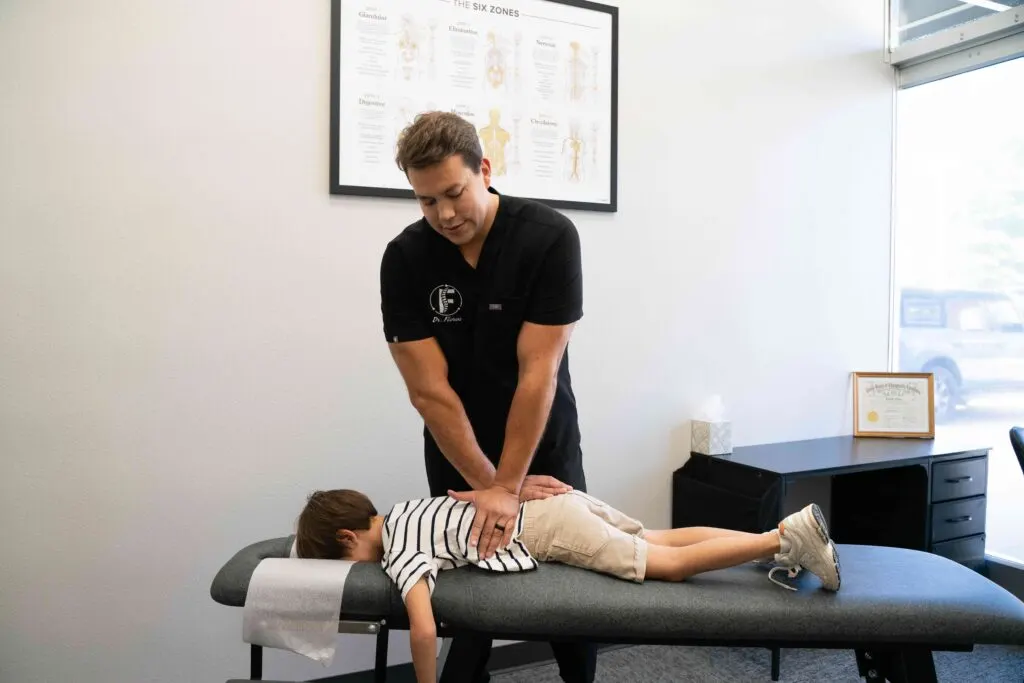
This is perhaps the most important thing for parents to understand: pediatric chiropractic care looks and feels completely different from what adults receive. Chiropractors who work with children use specialized training and extremely gentle techniques that are appropriate for each stage of development.
For infants, adjustments involve light fingertip pressure—often compared to the pressure you’d use to check a tomato for ripeness or the gentle touch you’d use on your closed eyelid. There’s no “cracking” or “popping” with infant adjustments. Many babies sleep right through their adjustments or seem completely relaxed during the process.
For toddlers and young children, techniques are still very gentle but may involve slightly more pressure as their bones and muscles develop. The adjustment methods are modified based on the child’s size, weight, and specific needs. At Flores Chiropractic in Tyler, we take time to explain everything to both parents and children (when age-appropriate) so everyone feels comfortable.
Teenagers may receive care that more closely resembles adult chiropractic, though we still account for the fact that their bodies are still growing and developing. The approach remains conservative and tailored to their individual needs.
Common Reasons Parents Bring Children to Our Tyler Office
Families seek pediatric chiropractic care for various reasons. Some come for specific concerns, while others are interested in wellness care to support their child’s overall development. Here are some of the most common reasons parents in Tyler bring their children to see us:
Newborns and Infants: Many parents bring their newborns in for an initial evaluation shortly after birth, especially if there were complications during delivery, forceps or vacuum extraction were used, or the baby was in a difficult position (such as breech). Some infants show signs of discomfort like difficulty latching during breastfeeding, excessive crying or fussiness, torticollis (head tilting to one side), or favoring looking in only one direction.
Toddlers and Preschoolers: As children become more active, parents often notice issues like frequent falls affecting comfort, difficulty with sleep patterns, or concerns about developmental milestones. Some parents seek care as part of a holistic approach to their child’s wellness.
School-Age Children: Older children may experience growing pains, postural issues from heavy backpacks, discomfort related to sports activities, or tension headaches. We also see children whose parents are seeking drug-free approaches to support their overall health and wellness.
Adolescents: Teenagers often deal with the physical demands of competitive sports, poor posture from technology use, stress-related muscle tension, or discomfort associated with growth spurts. Many Tyler families bring their teenage athletes to us for performance support and injury prevention strategies.
What to Expect During Your Child’s Visit
We understand that bringing your child to a chiropractor for the first time can feel uncertain. Here’s what typically happens during a pediatric visit at our Tyler office:
Initial Consultation: We begin with a thorough conversation. We’ll ask about your child’s birth history, developmental milestones, current concerns, daily activities, and overall health history. This helps us understand your child’s unique needs and create an appropriate care plan.
Age-Appropriate Examination: The examination is tailored to your child’s age and comfort level. For infants, this might involve gentle observation of movement patterns and light palpation of the spine. For older children, we may assess posture, spinal alignment, range of motion, and nervous system function. We make everything as fun and non-threatening as possible—many children think they’re just playing games during their exam.
Gentle Adjustment: If we determine that chiropractic care is appropriate, we’ll perform an adjustment using techniques specifically designed for children. Parents are always present and encouraged to ask questions. The adjustment itself typically takes just a few minutes.
Education and Recommendations: We’ll discuss our findings with you and provide recommendations for care. This might include a schedule of visits, exercises or stretches to do at home, ergonomic advice for backpack wearing or study habits, and lifestyle recommendations to support your child’s spinal health.
At Flores Chiropractic, we prioritize creating a welcoming, comfortable environment for children. Our office is designed to help kids feel at ease, and we take as much time as needed to ensure both parent and child feel confident in the care process.
Safety and Research on Pediatric Chiropractic
Safety is naturally a top concern for parents. The good news is that when performed by a trained chiropractor, pediatric chiropractic care has an excellent safety profile. Multiple studies have examined the safety of chiropractic care for children, with research indicating that adverse events are extremely rare, especially when care is provided by trained professionals.
A comprehensive review published in the journal Explore found that serious adverse events following chiropractic care in children are exceptionally uncommon. The most commonly reported reactions are minor and temporary, such as mild soreness or increased fussiness, which typically resolve within 24 hours.
The gentleness of pediatric techniques is a key factor in safety. The amount of force used on infants is minimal—studies have measured it at just a few ounces of pressure. This is far less than the forces involved in normal daily activities like lifting a baby, changing positions during sleep, or the birth process itself.
Evidence suggests that chiropractic care may be helpful for certain pediatric conditions. Research has indicated potential benefits for musculoskeletal complaints, and some studies suggest it may help with issues like infant colic, though more research is needed in many areas. What’s important to understand is that chiropractors don’t claim to “cure” conditions—rather, we focus on optimizing nervous system function and addressing musculoskeletal concerns that may be affecting a child’s comfort and well-being.
Here in Tyler, parents can feel confident knowing that pediatric chiropractic care is practiced conservatively, with appropriate training, and with the child’s best interests always as the top priority.
Care Throughout Different Developmental Stages
Children’s bodies change dramatically from birth through adolescence, and chiropractic care adapts to meet these changing needs.
Infancy (Birth to 12 months)
During the first year, babies undergo rapid development. They triple their birth weight, develop head control, learn to roll over, sit up, crawl, and often take their first steps. Each of these milestones requires proper nervous system coordination and musculoskeletal development. Gentle chiropractic care during this stage focuses on supporting this natural development and addressing any discomfort that might interfere with movement patterns.
Toddlers and Preschoolers (1-5 years)
This stage involves constant movement—running, climbing, jumping, and yes, plenty of falls. Toddlers are learning to navigate their environment and refine their motor skills. Chiropractic care during these years often addresses the minor impacts from their active lifestyle and supports healthy posture development as they grow.
School Age (6-12 years)
School brings new physical demands. Children sit for extended periods, carry backpacks, and often begin organized sports. This is when postural habits begin to form. Many Tyler families bring their school-aged children in for wellness checks during this stage, especially at the beginning of the school year, to address any concerns before they become more established patterns.
Adolescence (13-18 years)
Teenagers experience growth spurts, increased academic pressure, heavier technology use, and often intense athletic training. Their bodies are approaching adult size but are still developing. Chiropractic care during the teen years can help address the physical demands they face and support healthy spinal development during these crucial years.
| Age Group | Common Physical Demands | Chiropractic Focus |
|---|---|---|
| Infants (0-12 months) | Birth stress, developmental milestones, tummy time | Gentle nervous system support, addressing birth-related tension |
| Toddlers (1-5 years) | Frequent falls, active play, rapid growth | Supporting healthy movement patterns, minor impact assessment |
| School Age (6-12 years) | Backpack wearing, prolonged sitting, sports introduction | Posture education, spinal health maintenance, activity support |
| Teens (13-18 years) | Growth spurts, intensive sports, technology use, academic stress | Performance support, injury prevention, posture correction |
How Chiropractic Care Supports Growing Bodies
Chiropractic philosophy centers on the relationship between the spine and the nervous system. The nervous system controls and coordinates every function in the body—from breathing and digestion to movement and immune response. The spine protects the spinal cord, which serves as the main communication highway between the brain and the rest of the body.
When the spine is properly aligned and moving well, the nervous system can function optimally. Misalignments or restrictions in spinal movement—what chiropractors call subluxations—can potentially interfere with nervous system communication. In children, whose nervous systems are rapidly developing, maintaining proper spinal alignment may support healthy growth and development.
It’s important to understand that chiropractic care for children isn’t about treating diseases or specific medical conditions. Instead, it’s about supporting the body’s natural ability to function, grow, and heal. We focus on removing interference in the nervous system, optimizing biomechanics, and supporting overall wellness.
At Flores Chiropractic in Tyler, we view pediatric care as part of a broader wellness approach. Just as parents take their children for regular dental checkups and well-child visits with their pediatrician, some families choose to include periodic chiropractic evaluations as part of their child’s proactive health care routine.
Practical Tips for Supporting Your Child’s Spinal Health
Between chiropractic visits, there’s plenty parents can do at home to support their child’s spinal health and overall musculoskeletal development.
Backpack Basics: Ensure your child’s backpack weighs no more than 10-15% of their body weight. Both shoulder straps should always be used, and the pack should sit evenly on the back with the bottom resting in the curve of the lower back. Consider a rolling backpack for heavier loads. Here in Tyler, many schools have implemented backpack weight guidelines—follow these recommendations carefully.
Technology Posture: When using tablets, phones, or computers, encourage your child to bring the device to eye level rather than looking down. Take regular breaks every 20-30 minutes to stand, stretch, and move around. Set up homework stations with proper ergonomics—feet flat on the floor, back supported, and screen at eye level.
Sleep Positioning: Provide an age-appropriate pillow that supports the natural curve of the neck. Side sleeping or back sleeping is generally better for spinal alignment than stomach sleeping. Ensure the mattress provides adequate support without being too firm or too soft.
Encourage Movement: Children’s bodies are designed to move. Encourage regular physical activity, outdoor play, and varied movements rather than prolonged periods in one position. Limit screen time according to pediatric guidelines, replacing sedentary activities with active play whenever possible.
Proper Footwear: Shoes affect the entire kinetic chain from the feet up through the spine. Ensure your child wears properly fitted, supportive shoes appropriate for their activities. Replace shoes when they become worn down.
Sports Safety: If your child participates in sports, ensure they use proper protective equipment, warm up before activities, and learn proper technique to minimize injury risk. Don’t overlook the importance of rest days for young athletes—overtraining can lead to overuse injuries.
Model Good Habits: Children learn by watching their parents. When you prioritize your own spinal health, maintain good posture, stay active, and make wellness choices, your children are more likely to adopt these habits themselves.
When to Consider Chiropractic Care for Your Child
Parents often ask when they should consider bringing their child in for an evaluation. While every family’s situation is different, here are some scenarios when chiropractic care might be appropriate:
After Birth: Many families choose to have their newborn evaluated shortly after birth, particularly if there were any complications, interventions, or a difficult delivery. This initial assessment can identify any areas of concern early on.
Developmental Concerns: If you notice your baby consistently favors looking in one direction, has difficulty latching on one side during breastfeeding, or seems uncomfortable in certain positions, an evaluation may be helpful.
After Falls or Injuries: Children fall and bump into things constantly as they learn and grow. While most minor tumbles don’t require intervention, if your child seems uncomfortable after a fall, has restricted movement, or you simply want peace of mind, a chiropractic evaluation can assess whether care is needed.
Postural Issues: If you notice your child developing postural habits like rounded shoulders, forward head posture, or uneven shoulder or hip height, early intervention can help prevent these patterns from becoming more established.
Sports Participation: Many Tyler families bring their young athletes in for wellness care during sports seasons. This proactive approach can help maintain optimal function and may support injury prevention.
Wellness Support: Some families incorporate periodic chiropractic checkups into their children’s regular health maintenance routine, similar to dental visits or pediatric checkups.
Red Flags Requiring Medical Attention: While chiropractic care can help with many musculoskeletal concerns, certain symptoms require immediate medical evaluation. Seek medical care immediately if your child experiences fever along with neck stiffness or pain, severe headache with vomiting or confusion, loss of bowel or bladder control, numbness or weakness in the limbs, difficulty walking or loss of coordination, or any symptom that seems serious or unusual to you as a parent.
Trust your parental instincts. If something seems wrong with your child, whether it requires medical attention, chiropractic care, or simply reassurance, it’s always appropriate to seek professional evaluation.
Final Thoughts from Flores Chiropractic
Pediatric chiropractic care offers Tyler families a gentle, conservative approach to supporting their children’s spinal health and nervous system function throughout all stages of growth and development. From the earliest days of infancy through the challenging teenage years, children’s bodies are constantly changing, adapting, and sometimes encountering physical stresses that affect their comfort and function.
At Flores Chiropractic here in Tyler, TX, we’re honored to be part of so many families’ healthcare teams. We understand that as a parent, you want to make informed decisions about your child’s care. That’s why we prioritize education, transparency, and creating a comfortable environment where both you and your child feel heard and respected.
Pediatric chiropractic isn’t about replacing your child’s pediatrician or treating medical conditions—it’s about supporting optimal nervous system function, addressing musculoskeletal concerns, and empowering families with the knowledge and tools to support their children’s wellness. Whether you’re considering care for a specific concern or exploring options for wellness support, we’re here to answer your questions and help you determine if chiropractic care is right for your family.
If you have questions about how pediatric chiropractic care might benefit your child, we encourage you to reach out. Every child is unique, and we’d be happy to discuss your specific situation and provide guidance based on your family’s individual needs.
Frequently Asked Questions
At what age can a child start chiropractic care?
Chiropractic care is safe for children of all ages, including newborns. Many parents bring infants in for evaluation within the first few weeks of life, particularly after difficult births. The techniques used are specifically modified for each age and developmental stage, with infant adjustments using only gentle fingertip pressure.
Does chiropractic adjustment hurt children?
No, properly performed pediatric chiropractic adjustments should not hurt. The techniques used for children are extremely gentle and completely different from adult adjustments. Most infants sleep through their adjustments, and older children often describe the experience as comfortable or even relaxing. Any temporary discomfort is typically very mild and brief.
How often do children need chiropractic care?
The frequency of care depends on your child’s individual needs and circumstances. Some children are seen for a specific concern and may need only a few visits. Others come in for periodic wellness checks every few months. Active young athletes might benefit from more regular care during their sports seasons. We’ll discuss an appropriate care plan based on your child’s specific situation.
Is there research supporting chiropractic care for children?
Yes, research on pediatric chiropractic care has grown significantly in recent years. Studies have demonstrated the excellent safety profile of pediatric chiropractic when performed by trained professionals. Evidence suggests potential benefits for certain musculoskeletal concerns and indicates that adverse events are extremely rare. However, more research is ongoing in many areas of pediatric chiropractic care.
Will chiropractic care interfere with my child’s medical treatment?
Chiropractic care is designed to complement, not replace, traditional medical care. At Flores Chiropractic in Tyler, we believe in collaborative care and encourage families to maintain relationships with their pediatricians and other healthcare providers. We’re happy to communicate with your child’s other providers when appropriate to ensure coordinated care.
What conditions can pediatric chiropractic care help with?
Pediatric chiropractors focus on supporting proper spinal alignment, nervous system function, and musculoskeletal health. Common reasons parents seek care include support after difficult births, discomfort from falls or sports activities, postural concerns, growing pains, and general wellness support. However, chiropractic care doesn’t treat specific diseases or medical conditions—instead, it supports the body’s natural function and addresses biomechanical concerns.
TL;DR – Key Takeaways
- Pediatric chiropractic care uses specialized, extremely gentle techniques specifically modified for children’s developing bodies—adjustments for infants involve only light fingertip pressure.
- Children face numerous physical stresses as they grow, from birth through adolescence, and gentle chiropractic care can help support proper spinal alignment and nervous system function during development.
- Research indicates that pediatric chiropractic care has an excellent safety profile when performed by trained professionals, with adverse events being extremely rare.
- Parents can support their child’s spinal health at home through proper backpack use, good technology posture, adequate sleep positioning, regular movement, and appropriate footwear.
- Chiropractic care complements traditional medical care and focuses on supporting the body’s natural function rather than treating specific diseases—always maintain your relationship with your child’s pediatrician for comprehensive healthcare.