Natural Headache Relief in Flint, TX: Chiropractic Care and Home Remedies
Headaches can derail your day, your sleep, and your plans. The good news: many people can reduce headache frequency and intensity with simple, natural steps—especially when those steps are guided by a careful chiropractic evaluation. At Flores Chiropractic here in Flint, TX, we help neighbors understand the musculoskeletal causes behind their headaches and build a targeted plan that starts with the spine and supports the whole person.
In this guide, you’ll learn how natural remedies for headache relief fit together—from chiropractic care and posture changes to home treatments, daily habits, and when to seek help.
What Do We Mean by “Natural Headache Relief”?
Natural headache relief focuses on non-drug strategies such as chiropractic care, movement, posture, hydration, sleep, stress management, and simple home treatments. The goal is to address root causes, not just mask symptoms.
Table of Contents
- Why Natural Remedies Matter for Headaches
- Understanding Common Headache Types
- How Chiropractic Care Helps Headache Sufferers in Flint
- Lifestyle Changes That Lower Headache Frequency
- Home Treatments You Can Try Today
- Common Mistakes That Keep Headaches Coming Back
- When to See a Chiropractor in Flint
- When to Seek Medical Care Urgently
- Myths and Facts About Headaches and Chiropractic
- Final Thoughts for Our Flint Community
Why Natural Remedies Matter for Headaches
Most everyday headaches are influenced by how we move, sit, sleep, and manage stress. Your neck, jaw, upper back, and shoulders share a tight relationship with the nerves that signal head pain. When joints are stiff or misaligned and muscles are overworked, the body often speaks through a headache.
Natural approaches aim to calm that overload. They support healthy joint motion, better muscle balance, and steadier nervous system function. This is where chiropractic care shines and why we build plans that start with the spine and extend into daily habits you can control.
Understanding Common Headache Types
Not all headaches are the same. Knowing the pattern helps us target the right solution. Here are three common categories we see at Flores Chiropractic:
| Headache Type | Hallmark Features | Where Chiropractic May Help |
|---|---|---|
| Tension-type | Dull, band-like pressure around the head; often linked to stress, posture, and muscle tightness | Improving neck and upper-back mobility, releasing muscle tension, and addressing ergonomics can reduce triggers |
| Cervicogenic | Pain that starts in the neck and radiates to the head; often one-sided; worsens with neck movement | Spinal adjustments and targeted soft-tissue work can address the neck dysfunction driving the headache |
| Migraine | Pulsating, moderate-to-severe pain; may include nausea and sensitivity to light/sound | While migraines are complex, reducing neck and shoulder tension and managing triggers may help some people |
This overview does not replace a full evaluation. We always start by listening to your story, examining your movement, and ruling out red flags before recommending care.
How Chiropractic Care Helps Headache Sufferers in Flint
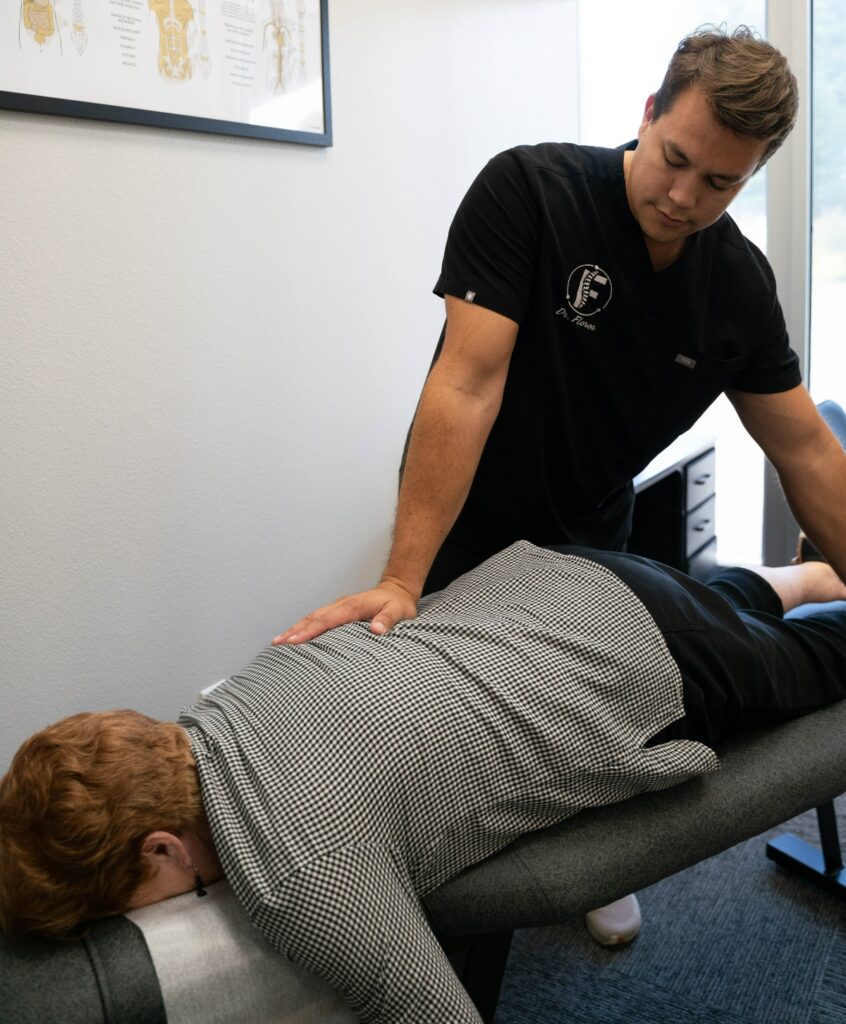
At Flores Chiropractic, chiropractic care isn’t an add-on—it’s the foundation. We focus on restoring healthy joint motion, easing muscle tension, and improving the way your nervous system processes mechanical stress. For many patients with tension-type or cervicogenic headaches, this combination is a direct path to relief.
Here’s how a typical, evidence-informed approach looks in our Flint office:
- Thorough assessment: We review your headache patterns, triggers, posture, work setup, sleep, and prior injuries. We assess your spine, especially the upper neck (occiput through C3), mid-back, and jaw mechanics.
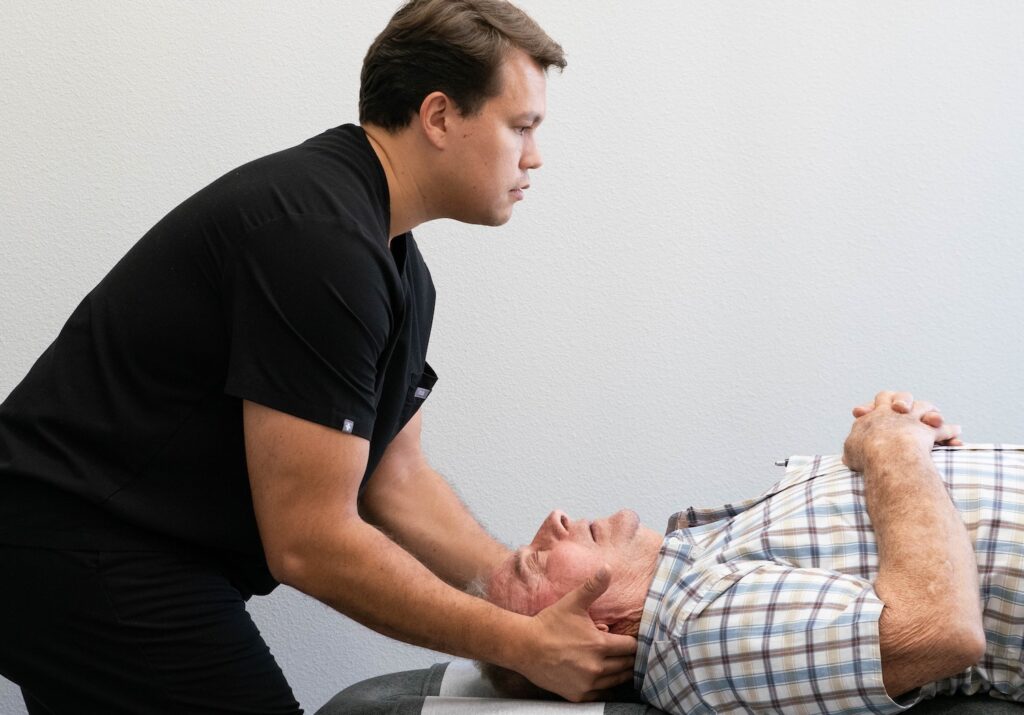
- Precise chiropractic adjustments: Gentle, targeted adjustments help restore motion where joints are restricted. Better motion often means less muscular guarding and fewer nociceptive signals (the body’s “stress” signals from irritated tissues) to the head and neck.
- Soft-tissue care: We address overactive muscles such as the suboccipitals, upper trapezius, levator scapulae, and scalene group. Releasing these areas can reduce referral pain to the head.
- Movement and posture coaching: We’ll show you simple drills that open the chest, strengthen the mid-back, and keep the neck neutral—so relief lasts beyond the visit.
- Ergonomic and lifestyle planning: Fine-tuning your desk height, pillow choice, hydration, and daily rhythm can remove the most common triggers we see in our community.
Chiropractic care is non-invasive and centered on function—helping your body move and feel the way it’s designed to. For many Flint patients, it’s the frontline strategy that makes every other healthy habit work better.
Lifestyle Changes That Lower Headache Frequency
Natural headache relief is a daily practice. Small, consistent choices add up. These are the habits we prioritize first with our patients:
- Hydration rhythm: Aim for steady water intake through the day. Dehydration is a common, fixable trigger—especially in Texas heat.
- Regular meals: Long gaps between meals can set off a headache in sensitive people. Keep snacks with protein and complex carbs on hand.
- Caffeine consistency: Big swings in caffeine can provoke headaches. If you drink coffee or tea, keep the amount and timing consistent.
- Sleep anchors: Go to bed and wake up at similar times daily. Use a supportive pillow that keeps your neck neutral—your ear should line up over your shoulder when lying on your side.
- Screen ergonomics: Keep the top of your monitor at eye level, elbows near 90 degrees, and feet flat. Use a separate keyboard for laptops when working longer than 20–30 minutes.
- Micro-breaks: Every 30–45 minutes, stand up and move your neck, shoulders, and upper back through gentle ranges. Movement nourishes joints and counters stiffness.
- Stress outlets: Brief breathing drills, short walks outdoors, and light mobility sessions calm the nervous system and reduce muscle clenching.
- Trigger awareness: Track patterns in a simple note on your phone: sleep, stress, meals, hydration, and screen time. Clarity leads to control.
- Light and noise: Bright or flickering light and loud noise can aggravate headaches. Sunglasses outdoors and reduced glare inside can help.
Home Treatments You Can Try Today
These simple, natural steps are safe for most people and pair well with chiropractic care:
- Neck and shoulder mobility: Slow “yes/no/maybe” nods; shoulder rolls; chin tucks against a wall. Keep movements gentle and pain-free.
- Suboccipital release: Lie on your back with a small, firm ball or rolled towel under the base of your skull for 2–3 minutes to relax tiny neck muscles.
- Contrast therapy: Use a warm pack across the upper back to relax tight muscles, then a cool pack at the base of the skull to calm irritation (10 minutes each).
- Breathing reset: Five deep nasal breaths—inhale 4 seconds, exhale 6 seconds. Repeat for 1–2 minutes to reduce tension.
- Gentle jaw care: Keep teeth slightly apart, tongue on the roof of the mouth, lips together. Avoid clenching during focused tasks.
- Walk and look far: A 10–15 minute outdoor walk, eyes looking at the horizon, relaxes neck flexors and eases screen strain.
If any movement increases pain, stop and let us evaluate. We’ll tailor better options for your body.
Common Mistakes That Keep Headaches Coming Back
- Only treating the pain, not the pattern: Short-term relief is helpful, but skipping the root cause (like a stiff neck or poor desk setup) invites the next headache.
- Self “neck cracking”: Twisting until something pops may give brief relief, but it often moves joints that are already mobile while the truly restricted ones stay stuck. This can perpetuate instability and tension.
- Weekend extremes: Oversleeping, skipping meals, or suddenly changing caffeine intake on weekends can trigger headaches. Consistency is your friend.
- Tiny pillows or tall stacks: An unsupportive pillow or multiple pillows can kink the neck. Aim for neutral alignment where your neck feels neither bent nor propped.
- Ignoring movement: Even perfect posture gets uncomfortable if you hold it too long. Motion, not just position, protects your neck.
When to See a Chiropractor in Flint
If headaches are interfering with your work, workouts, family time—or if you’re simply tired of chasing them—chiropractic evaluation is a smart first step. Consider booking a visit at Flores Chiropractic if:
- You’re getting headaches more than once a week, or they linger for hours to days.
- Your headaches start in the neck or worsen with neck movement or desk work.
- You feel tightness in the upper back, shoulders, or jaw along with head pain.
- You find yourself relying on over-the-counter options more days than not to get through normal routines.
- You’ve had a recent minor injury (sports, fender bender, slip) and headaches followed.
An in-person assessment lets us map out your specific triggers and build a plan around you.
When to Seek Medical Care Urgently
Most headaches are not dangerous. However, some symptoms call for immediate medical attention or emergency care. Seek help right away if you notice:
- Sudden, severe headache (“worst headache of my life”), especially with neck stiffness or confusion
- Headache after a head injury, or a new headache with fever, rash, or stiff neck
- New neurological symptoms such as weakness, numbness, facial droop, slurred speech, vision loss, or seizures
- A significant change in your usual headache pattern, or headaches that steadily worsen
- Severe headache during pregnancy with visual changes or swelling
Chiropractic care is not a replacement for emergency care. If you’re unsure, call your medical provider or emergency services first.
Myths and Facts About Headaches and Chiropractic
Myth: “Headaches come from the brain itself.” Fact: Brain tissue doesn’t have pain receptors. Most headaches arise from structures around the head and neck—muscles, joints, blood vessels, and connective tissues.
Myth: “Cracking your own neck is the same as a chiropractic adjustment.” Fact: Self-manipulation usually moves already mobile joints. Chiropractic adjustments target specific restricted joints to restore balanced motion and reduce irritation.
Myth: “I just have to live with headaches.” Fact: Many people see meaningful improvement by addressing neck function, posture, sleep, stress, and hydration. A focused chiropractic plan helps you tackle the pattern, not just the pain.
Final Thoughts for Our Flint Community
If you live in Flint, TX or the greater Tyler area, you know our days can be full—work, family, and getting outdoors. Headaches shouldn’t set the schedule. At Flores Chiropractic, we start with the spine, then support you with clear, doable steps at home. Natural remedies for headache relief work best when they’re personalized and consistent.
If you’re ready for answers—what’s causing your headaches and what to do next—our door is open. We’re here to help you move better, feel better, and get back to what you love.
FAQs
Can chiropractic help with migraines?
Migraines are complex and vary from person to person. While chiropractic doesn’t cure migraines, improving neck and upper-back mechanics and managing muscular triggers can help some patients reduce frequency or intensity. We’ll evaluate your pattern and discuss realistic expectations.
Is chiropractic safe for headache relief?
For most people, chiropractic care is considered a safe, conservative option when performed by a licensed chiropractor. We screen for red flags and adapt techniques to your age, build, and health history.
What pillow is best for neck-related headaches?
Choose a pillow that keeps your neck neutral—neither bent down nor propped up. Side sleepers often prefer medium height; back sleepers often prefer lower height. We can help you test options during your visit.
Should I use ice or heat for a headache?
For many tension and cervicogenic headaches, warmth across the upper back relaxes tight muscles, while cool at the base of the skull can calm irritation. Use what feels best to your body and avoid extremes.
How quickly will I feel relief?
Some patients feel better after the first visit; others improve over several sessions as mobility returns and habits change. Your timeline depends on how long the issue has been present, your daily demands, and consistency with your home plan.
Do I need X-rays for headaches?
Not usually. Imaging is reserved for specific situations based on your exam and history. We’ll let you know if it’s appropriate.
TL;DR
- Chiropractic care is a frontline, natural approach for tension-type and cervicogenic headaches, focusing on joint motion, muscle balance, and posture.
- Daily habits—steady hydration, consistent sleep, smart ergonomics, and stress management—lower headache frequency.
- Simple home treatments like gentle mobility, suboccipital release, and contrast therapy can help calm a brewing headache.
- See a chiropractor if headaches are frequent, start in the neck, or disrupt your routine; seek urgent medical care for red flags.
- Personalized plans work best. In Flint, TX, Flores Chiropractic is here to help you find lasting, natural relief.