If you’ve ever experienced sharp, shooting pain down your leg, numbness in your foot, or persistent lower back discomfort that just won’t quit, you might be dealing with a herniated disc. This common spinal condition affects thousands of people every year, and here in Tyler, TX, we see patients at Flores Chiropractic who are searching for answers and relief. The good news? Understanding what’s happening in your spine is the first step toward feeling better. A herniated disc doesn’t mean you’re destined for surgery or a life of chronic pain. With the right approach, many people find significant relief and return to the activities they love. In this comprehensive guide, we’ll walk you through everything you need to know about herniated discs—from how they’re diagnosed to treatment options and what recovery really looks like.
What is a herniated disc? A herniated disc occurs when the soft, gel-like center of a spinal disc pushes through a tear in its tougher outer layer. This can put pressure on nearby nerves, causing pain, numbness, tingling, or weakness that often radiates into your arms or legs. While the term “herniated” sounds serious, many herniated discs respond well to conservative, non-surgical care.
Table of Contents
- Understanding Your Spinal Discs
- What Causes a Herniated Disc?
- Signs and Symptoms to Watch For
- How Herniated Discs Are Diagnosed
- The Chiropractic Approach to Herniated Discs
- Treatment Options Beyond Chiropractic
- What to Expect During Recovery
- Practical Tips for Prevention and Daily Care
- When You Should See a Healthcare Provider
- Myths vs. Facts About Herniated Discs
Understanding Your Spinal Discs
Before we dive into herniated discs specifically, it helps to understand what spinal discs actually do. Think of your spine as a stack of bones called vertebrae. Between each vertebra sits a disc—a cushion-like structure that acts as a shock absorber for your spine. These discs allow you to bend, twist, and move comfortably throughout your day.
Each disc has two main parts. The outer layer, called the annulus fibrosus, is tough and fibrous—like the layers of an onion. The inner core, called the nucleus pulposus, is soft and gel-like. When everything is working properly, these discs keep your vertebrae from grinding against each other and help distribute forces evenly across your spine.
As we age, our discs naturally lose some water content and become less flexible. This is normal wear and tear. However, when too much pressure is applied, or when a disc has weakened over time, the inner gel can push through tears in the outer layer. That’s when we call it a herniated disc. You might also hear terms like “bulging disc,” “slipped disc,” or “ruptured disc”—though technically, discs don’t actually slip out of place.
Here in Tyler, many of our patients at Flores Chiropractic are surprised to learn that not all herniated discs cause pain. In fact, research suggests that many people have herniated discs visible on MRI scans without ever experiencing symptoms. Pain typically occurs when the herniated material presses on a nearby nerve root or causes inflammation in the surrounding tissue.
What Causes a Herniated Disc?
Understanding what leads to a herniated disc can help you make better choices for your spinal health. While there’s no single cause, several factors contribute to disc herniation, and often it’s a combination of elements rather than one specific incident.
Age-related degeneration is the most common underlying factor. As mentioned earlier, discs naturally lose moisture and elasticity over time. This process, called disc degeneration, typically begins in your 30s and continues throughout life. The outer layer of the disc becomes more brittle and prone to tears, even from minor stresses.
Sudden trauma or injury can certainly cause a disc to herniate. A car accident, fall, or lifting something heavy with poor form can create enough force to rupture the disc’s outer layer. However, many people at Flores Chiropractic tell us they can’t remember a specific injury—their symptoms just seemed to appear one day. This suggests that repetitive stress over time often plays a bigger role than single traumatic events.
Occupational factors matter more than you might think. Jobs that involve repetitive bending, twisting, or lifting put significant stress on your spinal discs. Workers in construction, healthcare, warehousing, and similar fields face higher risk. Even office workers who sit for extended periods with poor posture can develop disc problems over time, as prolonged sitting increases pressure on the lower back discs.
Body mechanics and movement patterns influence disc health significantly. Using your back instead of your legs when lifting, twisting while carrying heavy objects, or maintaining awkward positions for long periods all increase disc stress. Many patients here in Tyler don’t realize that seemingly harmless activities—like gardening or picking up grandchildren—can be the “final straw” for a disc that’s been under stress for years.
Other contributing factors include excess body weight (which increases spinal loading), smoking (which reduces oxygen to disc tissue and accelerates degeneration), genetic predisposition, and a sedentary lifestyle that weakens core muscles. Understanding these factors helps us develop personalized care plans that address not just the current problem but also reduce future risk.
Signs and Symptoms to Watch For
Recognizing the symptoms of a herniated disc is important because early intervention often leads to better outcomes. The specific symptoms you experience depend largely on where the herniation occurs and whether it’s pressing on a nerve root.
Lower back herniated discs are the most common, typically affecting the lumbar spine (L4-L5 or L5-S1 levels). Symptoms often include sharp or burning pain in the lower back that radiates down one leg—a condition called sciatica. You might feel numbness or tingling in your leg or foot, muscle weakness in the affected leg, or a sensation described as “pins and needles.” Pain often worsens with sitting, coughing, sneezing, or bending forward, while lying down or walking may provide some relief.
Neck herniated discs occur in the cervical spine and produce different symptoms. Pain typically radiates into the shoulder, arm, or hand on the affected side. You might experience weakness in your arm or hand, difficulty with fine motor skills like buttoning shirts, or numbness in specific fingers. Neck pain and stiffness are common, and turning your head may intensify symptoms.
At Flores Chiropractic, we’ve noticed that symptoms can vary greatly from person to person. Some patients describe constant, severe pain that disrupts sleep and daily activities. Others experience intermittent discomfort that comes and goes with certain movements or positions. Pain intensity doesn’t always correlate with the size of the herniation—sometimes small herniations cause significant symptoms while larger ones may be relatively painless.
It’s worth noting that symptoms can change over time. Initially, you might experience only back or neck pain. Days or weeks later, radiating symptoms may develop as inflammation spreads or the herniation progresses. This is why early evaluation is valuable—addressing the problem sooner rather than later often prevents symptom progression.
How Herniated Discs Are Diagnosed
Getting an accurate diagnosis is crucial for developing an effective treatment plan. At Flores Chiropractic in Tyler, TX, Dr. Flores uses a comprehensive approach to diagnose herniated discs, beginning with a thorough evaluation that goes well beyond just asking about your symptoms.
The consultation and history form the foundation of diagnosis. You’ll discuss when symptoms began, what makes them better or worse, any previous back or neck problems, your occupation, and activities that may have contributed to the condition. This conversation provides valuable clues about the nature and location of the problem.
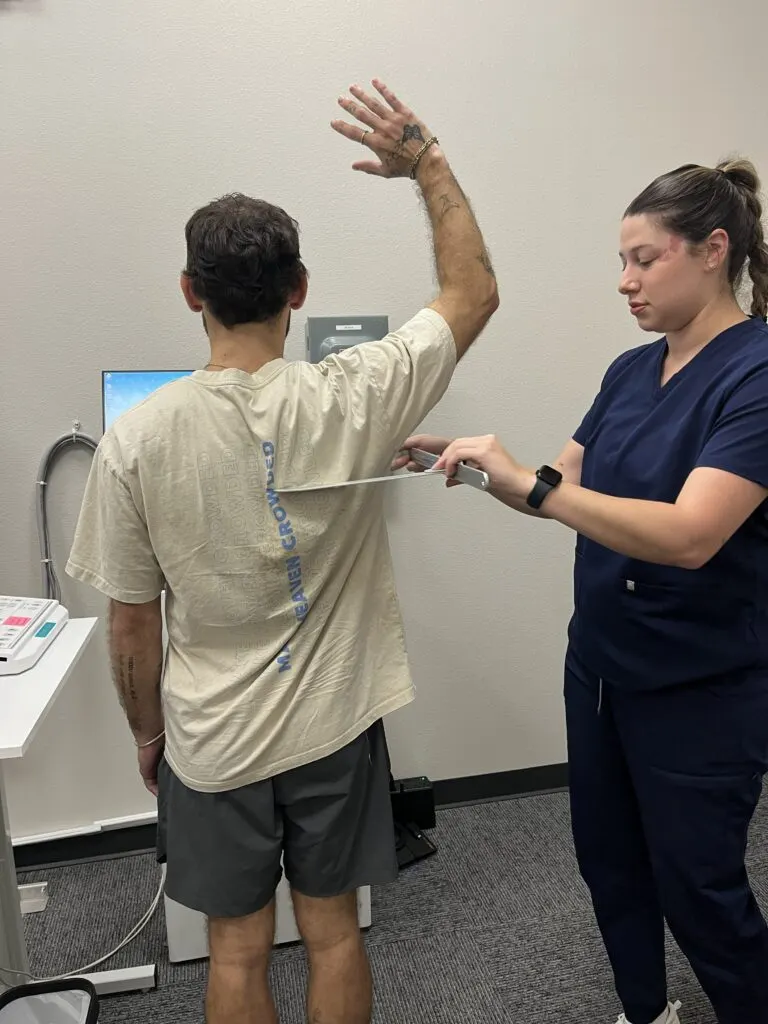
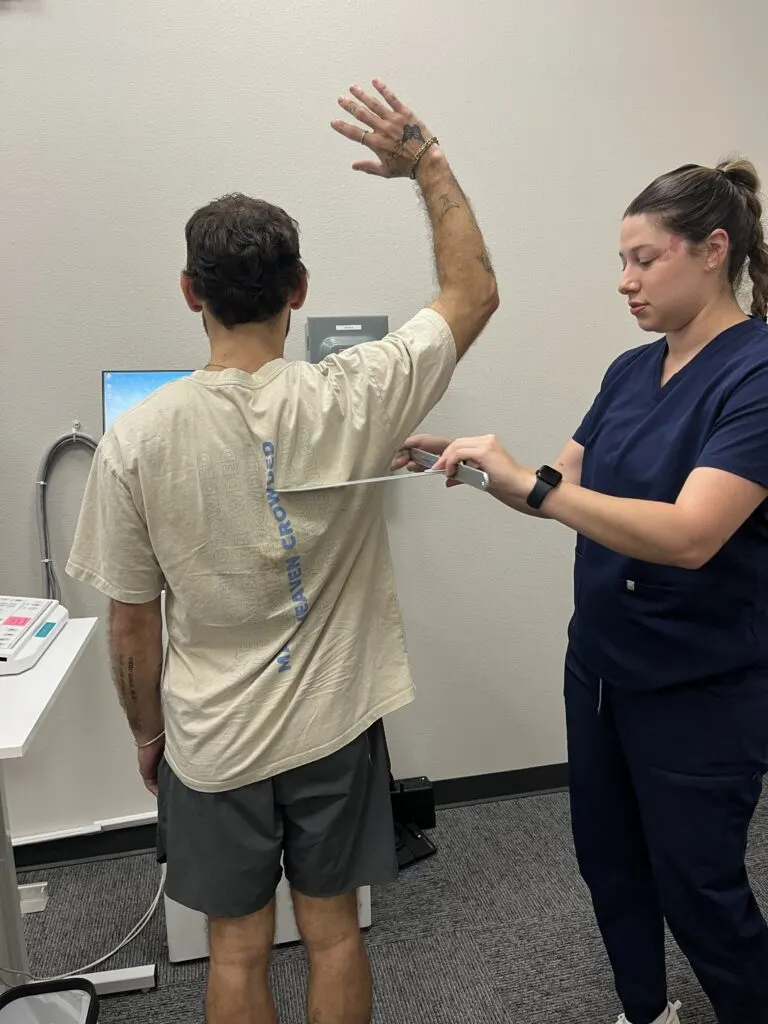
Physical examination includes several components. Range of motion testing reveals which movements reproduce or intensify your symptoms. Orthopedic tests like the straight leg raise help determine if nerve roots are being compressed. Neurological testing checks reflexes, muscle strength, and sensation in your arms or legs—changes in these areas can indicate which specific nerve root is affected. Palpation of the spine and surrounding muscles identifies areas of tenderness, muscle spasm, or restriction.
Imaging studies may be recommended depending on your presentation. X-rays don’t show discs themselves but can reveal disc space narrowing, alignment issues, or other bone abnormalities. MRI is the gold standard for visualizing herniated discs—it clearly shows soft tissues including discs, nerves, and ligaments. CT scans are sometimes used when MRI isn’t available or appropriate. However, it’s important to understand that imaging isn’t always necessary, especially if symptoms are mild and responding to conservative care.
Research indicates that many people without any symptoms have disc abnormalities visible on MRI. This means that what shows up on imaging doesn’t always correlate perfectly with what you’re feeling. That’s why clinical examination findings—your actual symptoms and how your body responds to various tests—are often more important than imaging results alone. At Flores Chiropractic, we use imaging as one piece of the diagnostic puzzle, not the entire picture.
The diagnostic process also includes ruling out other conditions that can mimic herniated disc symptoms. Spinal stenosis, sacroiliac joint dysfunction, piriformis syndrome, and hip problems can all cause similar pain patterns. A thorough evaluation helps distinguish between these possibilities, ensuring you receive the most appropriate care.
The Chiropractic Approach to Herniated Discs
Chiropractic care offers a conservative, non-surgical approach to managing herniated discs that has helped many patients find relief and avoid more invasive interventions. At Flores Chiropractic, our approach is individualized, evidence-informed, and focused on your specific presentation and goals.
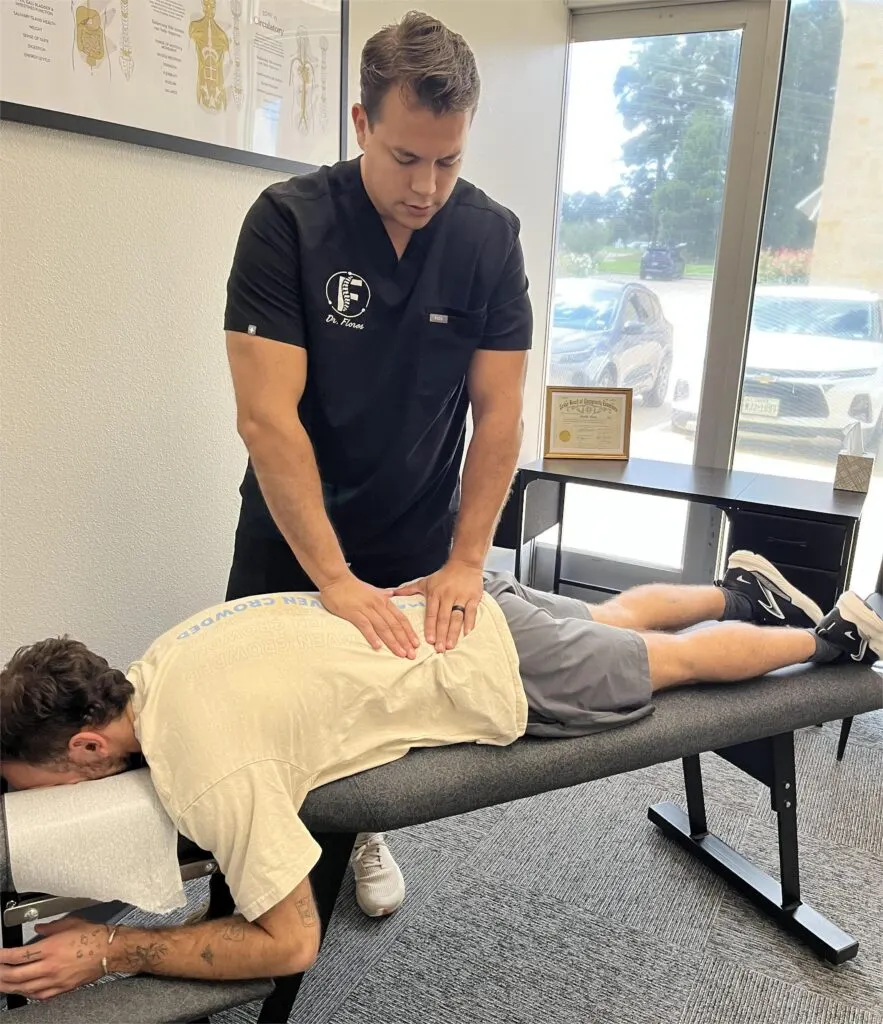
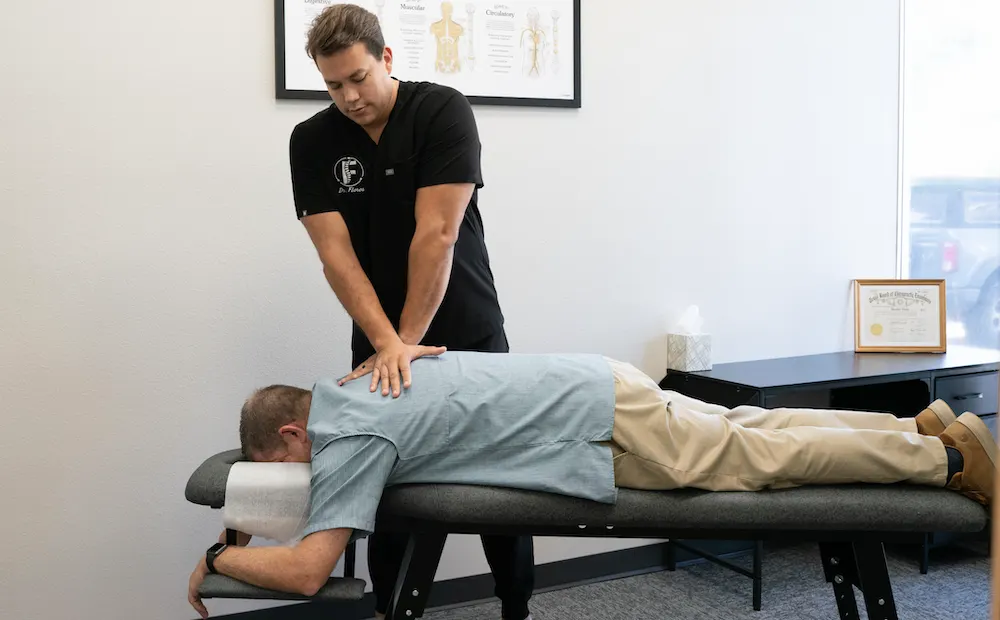
Initial care focuses on reducing inflammation and pain. During acute phases, gentle techniques are prioritized. Spinal adjustments for herniated discs are specifically modified—we avoid forceful manipulation in the direction of the herniation. Instead, we may use gentler methods like flexion-distraction technique, which involves a specialized table that gently stretches and decompresses the spine. This approach has been shown to help create negative pressure within the disc, potentially encouraging herniated material to move away from nerve roots.
Many patients here in Tyler worry that chiropractic adjustments might worsen their herniated disc. When performed appropriately by a trained chiropractor, spinal manipulation is generally safe for most disc herniations. However, there are important distinctions. Not all herniated discs are appropriate for chiropractic care—severe cases with progressive neurological deficits or cauda equina syndrome require immediate medical referral. This is why thorough evaluation is so important.
Complementary therapies enhance the effectiveness of spinal adjustments. Therapeutic exercises strengthen supporting muscles and improve flexibility. Core stabilization exercises are particularly important, as strong core muscles reduce stress on spinal discs. Soft tissue therapy addresses muscle tension and trigger points that often accompany disc problems. Ice therapy during acute inflammation and heat therapy during later stages can provide symptom relief.
Postural correction and ergonomic advice are integral parts of care. Poor posture increases disc pressure and can slow healing. We work with patients to improve sitting posture, optimize workstation setup, and modify daily activities that aggravate symptoms. Small changes in how you move and position yourself throughout the day can make a significant difference in both symptom management and long-term outcomes.
Evidence suggests that chiropractic care, when combined with exercise and education, can be effective for many patients with herniated discs. A systematic review published in the Journal of Manipulative and Physiological Therapeutics indicated that spinal manipulation may provide benefits for lumbar disc herniation with radiculopathy. However, outcomes vary, and what works for one person may not work for another. That’s why we continuously assess your response to care and adjust our approach accordingly.
At Flores Chiropractic, we view ourselves as part of your healthcare team, not as isolated practitioners. If your condition isn’t responding as expected, or if examination findings suggest you need additional intervention, we won’t hesitate to coordinate care with other providers or refer you for additional evaluation.
Treatment Options Beyond Chiropractic
While chiropractic care can be highly effective for herniated discs, it’s important to understand the full spectrum of treatment options available. A comprehensive approach often yields the best results, and different strategies may be appropriate at different stages of recovery.
Conservative medical management typically begins with over-the-counter pain relievers and anti-inflammatory medications. These can help manage symptoms while your body heals. Prescription medications like muscle relaxants or stronger pain relievers may be recommended for more severe cases. Oral corticosteroids are sometimes prescribed to reduce inflammation around compressed nerve roots. While these medications can provide relief, they address symptoms rather than underlying causes.
Physical therapy complements chiropractic care beautifully. Physical therapists focus on exercises, stretches, and movement retraining that support spinal health. Many patients benefit from receiving both chiropractic and physical therapy services—the combination addresses both joint mechanics and muscle function. Here in Tyler, we often work collaboratively with local physical therapists to provide coordinated care.
Epidural steroid injections deliver anti-inflammatory medication directly into the area around compressed nerve roots. These injections can provide significant short-term relief for some patients, particularly when radicular pain (radiating leg or arm pain) is severe. However, injections don’t address the herniation itself, and relief may be temporary. They’re typically considered when conservative care hasn’t provided adequate relief after several weeks.
Lifestyle modifications play a crucial role regardless of which treatments you pursue. Weight management reduces spinal loading. Smoking cessation improves disc nutrition and healing capacity. Stress management techniques can reduce muscle tension that exacerbates symptoms. Activity modification during acute phases prevents further injury while keeping you as active as possible within pain tolerance.
Surgical intervention is reserved for specific situations. Surgery may be considered when conservative treatments have failed after several months, neurological function is deteriorating, or cauda equina syndrome is present (a rare emergency requiring immediate surgery). Common procedures include microdiscectomy, which removes the herniated portion of the disc, and laminectomy, which removes bone to relieve nerve compression. While surgery can provide relief, it carries risks and doesn’t prevent future disc problems. Most herniated discs—research suggests around 80-90%—improve with conservative care, making surgery unnecessary.
At Flores Chiropractic, we respect that each patient’s situation is unique. Some people prefer to exhaust all conservative options before considering surgery. Others have already had surgery and are seeking post-operative care and rehabilitation. We meet you wherever you are in your healthcare journey and provide appropriate guidance and support.
What to Expect During Recovery
One of the most common questions patients ask at our Tyler clinic is: “How long until I feel better?” The answer varies considerably depending on several factors, but understanding general recovery patterns can help set realistic expectations and reduce anxiety.
Acute phase (first 2-4 weeks): During this initial period, symptoms are typically at their worst. Pain, numbness, and tingling may be intense, and certain movements may be significantly limited. The focus during this phase is pain management, inflammation reduction, and avoiding activities that worsen symptoms. Many patients experience some improvement within the first few weeks with appropriate care. However, symptoms can fluctuate—you might feel better one day and worse the next, which is normal and doesn’t necessarily mean you’re not healing.
Subacute phase (4-12 weeks): Most patients notice gradual improvement during this period. Pain intensity typically decreases, range of motion improves, and daily activities become easier. However, some symptoms may persist, particularly numbness or tingling. This phase focuses on gradually increasing activity levels, strengthening exercises, and postural retraining. Patience is crucial here—pushing too hard too soon can trigger symptom flare-ups that set back progress.
Chronic phase (beyond 12 weeks): By three months, many patients have achieved significant improvement or complete resolution of symptoms. Some individuals continue to experience mild, intermittent discomfort for several months. A small percentage develop chronic symptoms that require ongoing management. Even in these cases, symptoms usually become more manageable over time with appropriate care and self-management strategies.
Research indicates that the natural history of herniated discs tends toward improvement. Studies using serial MRI scans have shown that herniated disc material often shrinks or resorbs over time—your body can actually break down and absorb the herniated portion. This process typically takes several months, which helps explain why symptoms gradually improve even without surgical intervention.
Several factors influence recovery speed. Larger herniations may take longer to improve than smaller ones. Herniations that severely compress nerve roots often require more time for nerve healing, even after mechanical pressure is relieved—nerves heal slowly. Your overall health, age, stress levels, activity level, and compliance with treatment recommendations all affect outcomes. Psychological factors matter too—patients with positive expectations and active coping strategies tend to recover better than those who catastrophize symptoms or fear movement.
At Flores Chiropractic, we monitor your progress carefully throughout recovery. Regular re-examinations help us determine if care is working and when to progress to more active rehabilitation phases. We celebrate small improvements with you and adjust our approach if progress stalls. Recovery isn’t always linear, but with persistence and appropriate care, most patients achieve good outcomes.
Practical Tips for Prevention and Daily Care
Whether you’re currently recovering from a herniated disc or hoping to prevent one, these practical strategies can protect your spinal health. At Flores Chiropractic, we emphasize that small, consistent changes in daily habits often make the biggest difference over time.
Master proper lifting technique: Always bend at your knees and hips, not your waist. Keep the object close to your body—the farther away you hold something, the more stress on your discs. Avoid twisting while lifting—pivot your feet instead. Tighten your core muscles before and during the lift. If something is too heavy, ask for help or use equipment. These principles apply whether you’re lifting a box at work or picking up a grandchild.
Optimize your sitting posture: Prolonged sitting increases disc pressure significantly. Use a chair with good lumbar support, or add a small cushion in your lower back curve. Keep your feet flat on the floor with knees roughly level with your hips. Position your computer screen at eye level to avoid neck strain. Set a timer to remind yourself to stand and move every 30-45 minutes. Even brief movement breaks reduce disc stress and improve circulation.
Strengthen your core: Strong abdominal and back muscles support your spine and reduce disc loading. Exercises don’t need to be complicated—planks, bird dogs, and dead bugs are excellent core stabilizers. Focus on quality over quantity, maintaining proper form throughout. If you’re recovering from a herniated disc, work with your chiropractor or physical therapist to determine which exercises are appropriate for your current stage of healing.
Maintain healthy body weight: Excess weight, particularly around the midsection, increases load on spinal discs. Even modest weight loss can significantly reduce disc stress. Combined with core strengthening, weight management is one of the most effective prevention strategies. Here in Tyler, we recognize that lifestyle changes aren’t always easy, but even small steps in the right direction benefit your spinal health.
Pay attention to sleep position: Your sleeping position affects disc health during the 6-8 hours you spend in bed each night. Side sleeping with a pillow between your knees maintains neutral spine alignment. Back sleeping with a pillow under your knees reduces lower back stress. Avoid stomach sleeping, which hyperextends the lower back and twists the neck. Invest in a supportive mattress—one that’s not too soft or too hard typically works best.
Stay active with low-impact exercise: Regular physical activity keeps discs healthy by promoting circulation and maintaining flexibility. Walking, swimming, cycling, and yoga are excellent choices for most people. Avoid high-impact activities or sports that involve repetitive twisting during acute phases. Listen to your body—exercise shouldn’t significantly increase symptoms. Consistency matters more than intensity when it comes to spinal health.
Manage stress effectively: Chronic stress increases muscle tension, particularly in the neck, shoulders, and back. This tension alters movement patterns and increases disc stress. Find stress management techniques that work for you—deep breathing, meditation, time in nature, hobbies, or connecting with loved ones. Many patients at Flores Chiropractic report that addressing stress improves their physical symptoms significantly.
Stop smoking: Smoking reduces blood flow to spinal discs, depriving them of oxygen and nutrients needed for healing and maintenance. Smokers have higher rates of disc degeneration and herniation. Quitting improves disc health and overall healing capacity. If you’re struggling to quit, talk with your healthcare provider about resources and support available here in Tyler.
| Activity/Position | Approximate Disc Pressure | Recommendation |
|---|---|---|
| Lying down | Lowest pressure (baseline) | Ideal for acute pain relief |
| Standing upright | Moderate pressure | Better than sitting for disc health |
| Walking | Similar to standing | Promotes circulation, good for recovery |
| Sitting with good posture | Higher than standing | Use lumbar support, take frequent breaks |
| Sitting with poor posture | Significantly increased | Avoid slouching, maintain lumbar curve |
| Bending forward | Highest pressure | Bend at knees/hips, not waist |
| Lifting with poor form | Dramatically increased | Always use proper lifting mechanics |
When You Should See a Healthcare Provider
Knowing when to seek professional help is important for both safety and optimal outcomes. While many cases of back and neck pain resolve on their own, certain situations warrant prompt evaluation by a chiropractor, physician, or other healthcare provider.
Seek care within a few days if: You experience back or neck pain that radiates into your arm or leg. Numbness, tingling, or weakness develops in your extremities. Pain persists beyond a few days despite rest and over-the-counter pain relievers. Symptoms significantly limit your daily activities or interfere with sleep. You have a history of cancer, osteoporosis, steroid use, or conditions that compromise your immune system—these require more cautious evaluation.
Seek immediate medical attention if: You develop sudden, severe weakness in your legs or arms. You experience loss of bladder or bowel control, or difficulty urinating. You have numbness in the saddle area (inner thighs, back of legs, area around the rectum). You develop coordination problems or difficulty walking. Pain follows significant trauma like a fall or car accident. You experience fever along with back pain, which could indicate infection.
These red flag symptoms may indicate serious conditions requiring urgent medical evaluation. Cauda equina syndrome, for example, is a rare emergency that occurs when herniated disc material severely compresses the bundle of nerve roots at the end of the spinal cord. This condition requires emergency surgery to prevent permanent neurological damage. While rare, it’s important to recognize warning signs.
At Flores Chiropractic in Tyler, TX, we perform thorough screenings to identify when symptoms fall outside the scope of chiropractic care. Your safety is our top priority. If examination findings raise concerns, we’ll coordinate appropriate medical referral while continuing to support you through your healthcare journey. Many patients appreciate having a trusted healthcare provider who can help them navigate decisions and determine the most appropriate course of action.
Even if you’re not experiencing red flag symptoms, seeking care earlier rather than later often leads to better outcomes. Early intervention can prevent acute problems from becoming chronic conditions. Conservative care like chiropractic treatment is most effective when started before compensation patterns and deconditioning set in. Don’t wait until symptoms become unbearable—addressing problems when they’re still manageable typically results in faster, more complete recovery.
Myths vs. Facts About Herniated Discs
Myth: A herniated disc always requires surgery
Fact: Most herniated discs improve with conservative care. Research consistently shows that 80-90% of patients experience significant improvement without surgery. Surgery is typically reserved for cases where conservative treatment has failed after several months, neurological function is deteriorating, or rare emergency situations are present. At Flores Chiropractic, we’ve seen countless patients avoid surgery through comprehensive conservative care.
Myth: You should avoid all physical activity with a herniated disc
Fact: While you should avoid activities that significantly worsen symptoms, prolonged bed rest actually slows recovery and leads to deconditioning. Staying reasonably active within your tolerance promotes healing by maintaining circulation, preventing muscle atrophy, and reducing the risk of chronic pain development. The key is finding the right balance—modifying activities appropriately while maintaining movement. Your chiropractor can guide you on safe activity levels for your specific situation.
Myth: Spinal manipulation will make a herniated disc worse
Fact: When performed by a qualified chiropractor who has thoroughly evaluated your condition, spinal manipulation is generally safe for most herniated discs. Chiropractors modify techniques based on your presentation—we don’t use the same forceful adjustments on everyone. Gentle approaches like flexion-distraction have shown promise for disc herniations. However, there are situations where manipulation isn’t appropriate, which is why proper screening and individualized care planning are essential.
Myth: If the pain goes away, the disc has healed
Fact: Pain reduction is encouraging, but it doesn’t necessarily mean the disc has fully healed or returned to normal. Structural changes visible on MRI may persist even after symptoms resolve. This is actually okay—many people function perfectly well with disc abnormalities visible on imaging. However, this underscores the importance of completing your rehabilitation program even after feeling better. Strengthening supporting structures and addressing contributing factors helps prevent recurrence and supports long-term spinal health.
Myth: Herniated discs only affect older people
Fact: While disc degeneration increases with age, herniated discs can occur at any age. Here in Tyler, we see patients in their 20s and 30s with herniated discs, often related to sports injuries, occupational demands, or genetic predisposition. Younger patients typically heal faster due to better disc vascularity and overall health, but they’re not immune to disc problems. Prevention strategies are important regardless of age.
Myth: Once you herniate a disc, you’ll have problems forever
Fact: Many people fully recover from herniated discs and return to all their normal activities, including sports and physically demanding work. While having a herniated disc does slightly increase your risk of future disc problems, this doesn’t mean you’re destined for chronic issues. Following appropriate rehabilitation, maintaining core strength, practicing good body mechanics, and making healthy lifestyle choices all significantly reduce recurrence risk. At Flores Chiropractic, we focus on not just getting you better, but keeping you better.
Final Thoughts from Flores Chiropractic
Dealing with a herniated disc can feel overwhelming, especially when pain disrupts your daily life and activities you enjoy. But as we’ve explored throughout this article, there’s genuine reason for optimism. The majority of herniated discs improve significantly with time and appropriate conservative care. Your body has remarkable healing capacity when given the right support and environment.
Here at Flores Chiropractic in Tyler, TX, we’ve had the privilege of helping many patients navigate their herniated disc journey—from the initial diagnosis through treatment and recovery, and ultimately back to the active, pain-free life they deserve. We understand the physical discomfort, the frustration of limitations, and the worry about what the future holds. You’re not alone in this experience.
Every patient’s situation is unique, which is why we take time to thoroughly evaluate your specific condition, listen to your concerns, and develop an individualized care plan that makes sense for your circumstances and goals. Whether you’re currently dealing with a herniated disc, recovering from one, or hoping to prevent spinal problems in the future, we’re here to provide evidence-based care, honest guidance, and genuine support.
If you’re experiencing symptoms that concern you, or if you simply want to learn more about protecting your spinal health, we welcome you to reach out. Taking that first step toward getting evaluated and starting appropriate care often marks the turning point toward feeling better. Your spine supports you through every moment of every day—it deserves attention and care from professionals who understand its complexity and respect its importance to your overall wellbeing.
Dr. Flores and our team at Flores Chiropractic look forward to serving the Tyler community with compassionate, effective chiropractic care. Your journey to better spinal health and improved quality of life can begin today.
Frequently Asked Questions
Can a herniated disc heal on its own without treatment?
Yes, many herniated discs improve naturally over time as your body resorbs the herniated material and inflammation decreases. However, conservative treatment including chiropractic care, exercise, and activity modification often speeds recovery and provides symptom relief during the healing process. Even if a disc might eventually improve on its own, appropriate care can significantly reduce suffering and prevent compensation patterns that lead to other problems.
How do I know if my disc problem is serious enough to see a chiropractor?
If back or neck pain persists beyond a few days, radiates into your arms or legs, or is accompanied by numbness, tingling, or weakness, it’s worth getting evaluated. You don’t need to wait until symptoms become severe. Early evaluation and treatment often lead to faster recovery and can prevent acute problems from becoming chronic conditions. At Flores Chiropractic, we perform thorough assessments to determine the nature of your problem and whether chiropractic care is appropriate for your situation.
Will I need an MRI before starting chiropractic care for a herniated disc?
Not necessarily. Many patients begin conservative care without imaging, especially if they don’t have red flag symptoms. Your chiropractor will determine through examination whether imaging is needed before starting treatment. MRI may be recommended if symptoms are severe, if neurological deficits are present, if symptoms aren’t improving with care, or if findings suggest something outside the scope of chiropractic practice. The decision is based on clinical findings and your specific presentation.
Can I still exercise if I have a herniated disc?
In most cases, yes, though you’ll need to modify activities appropriately. Low-impact exercises like walking, swimming, and specific therapeutic exercises are often beneficial during recovery. High-impact activities, heavy lifting, and movements that significantly worsen symptoms should be avoided temporarily. Your chiropractor can provide specific guidance on which exercises are safe and helpful for your current stage of healing. Maintaining activity within appropriate limits generally supports recovery better than complete rest.
How long does chiropractic treatment for a herniated disc typically take?
Treatment duration varies based on severity, location of the herniation, your overall health, and how well your body responds to care. Some patients notice improvement within a few visits, while others require several weeks or months of treatment. Most care plans begin with more frequent visits during the acute phase, then gradually decrease frequency as you improve. At Flores Chiropractic, we regularly reassess your progress and adjust the care plan accordingly, always keeping you informed about what to expect.
Is it normal for symptoms to fluctuate during recovery from a herniated disc?
Yes, it’s completely normal for symptoms to vary from day to day during recovery. You might feel significantly better one day and experience increased discomfort the next. This doesn’t mean you’re not healing—it’s part of the typical recovery pattern. Symptoms often fluctuate based on activity levels, positions, stress, weather changes, and the natural healing process. Over time, the overall trend should be toward improvement, even if progress isn’t perfectly linear. If symptoms suddenly worsen significantly or new symptoms develop, contact your chiropractor for evaluation.
TL;DR – Key Takeaways
- A herniated disc occurs when the soft inner material of a spinal disc pushes through its outer layer, potentially compressing nearby nerves and causing pain, numbness, or weakness that radiates into your arms or legs.
- Most herniated discs (80-90%) improve with conservative treatment including chiropractic care, exercise, and lifestyle modifications—surgery is rarely necessary.
- Diagnosis involves comprehensive evaluation including health history, physical examination, and neurological testing; imaging like MRI may be used but isn’t always required initially.
- Recovery typically occurs in phases over several weeks to months, with most patients experiencing significant improvement within 6-12 weeks of appropriate care.
- Prevention strategies include proper lifting technique, good posture, core strengthening, maintaining healthy body weight, staying active, and managing stress—small daily habits make a significant difference in long-term spinal health.