
Back pain can put your life on pause. If you’ve never had a chiropractic back pain adjustment, it’s normal to wonder what it feels like, how it works, and what to expect. At Flores Chiropractic here in Flint, TX, we focus on precise, evidence-informed spinal care that helps you move better, feel better, and get back to what you love—without relying on invasive procedures.
In this guide, I’ll walk you through the visit, the techniques we use, the sounds you may hear, and how we tailor care to your body. My goal is to make the process clear, comfortable, and confidence-inspiring from the very first visit.
Table of Contents
- What Is a Chiropractic Back Pain Adjustment?
- Your First Visit: Assessment and Plan
- The Techniques We Use for Back Pain Adjustments
- What You May Feel During and After an Adjustment
- Why Alignment Matters: Simple Biomechanics
- Myths vs. Facts About Back Adjustments
- Practical Ways to Support Your Results
- When to See a Chiropractor for Back Pain
- Safety, Red Flags, and When We Refer
- How Care Plans Work at Flores Chiropractic
- Our Local Approach in Flint, TX
- FAQs
- TL;DR Summary
What Is a Chiropractic Back Pain Adjustment?
A back pain adjustment is a skilled, hands-on or instrument-assisted technique that restores normal motion to a joint in your spine or pelvis. By improving how the joint moves, we can reduce irritation in nearby tissues and help your body move and heal more efficiently.
Your First Visit: Assessment and Plan
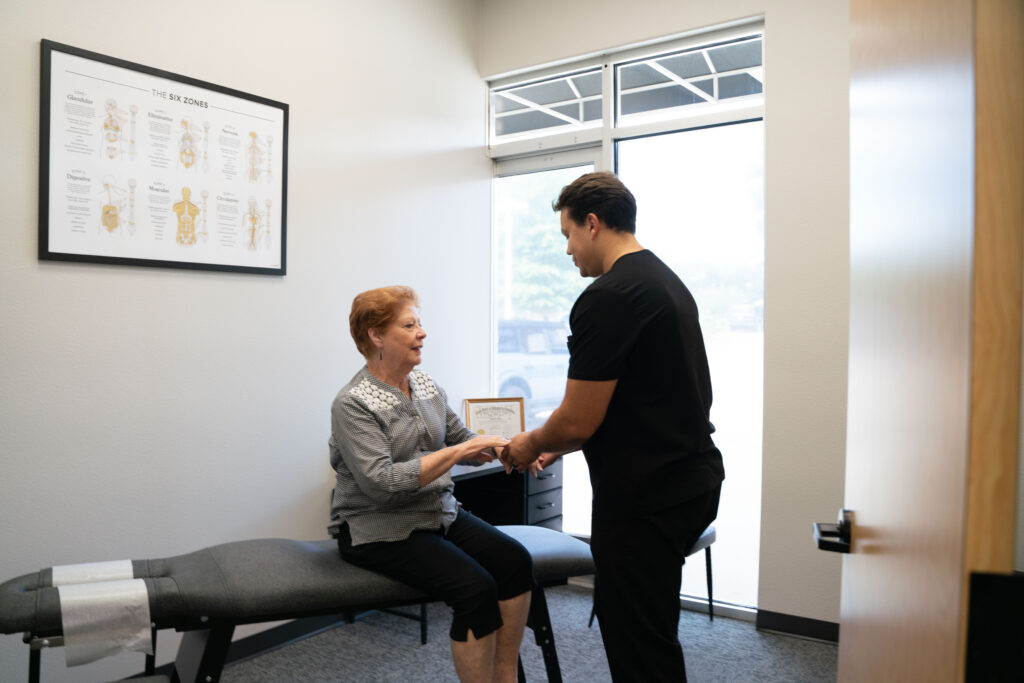
Your first appointment is about listening and learning. We start with a thorough conversation about your pain, activities, work setup, and goals. Then we perform an exam that may include posture, range of motion, orthopedic checks, and palpation to find restricted joints and tight muscles.
If needed, we consider imaging based on your history and exam findings. Most people do not require X-rays to begin safe, effective chiropractic care. We only use imaging when it can change your plan or is clinically indicated.
Before any adjustment, I’ll explain what I found and recommend a plan that fits your body and schedule. You’ll know exactly what we’re doing and why—no surprises.
The Techniques We Use for Back Pain Adjustments
Every spine is unique, so we select techniques that match your age, comfort level, and presentation. Here are common approaches you may experience at Flores Chiropractic.
Diversified (manual) adjustments
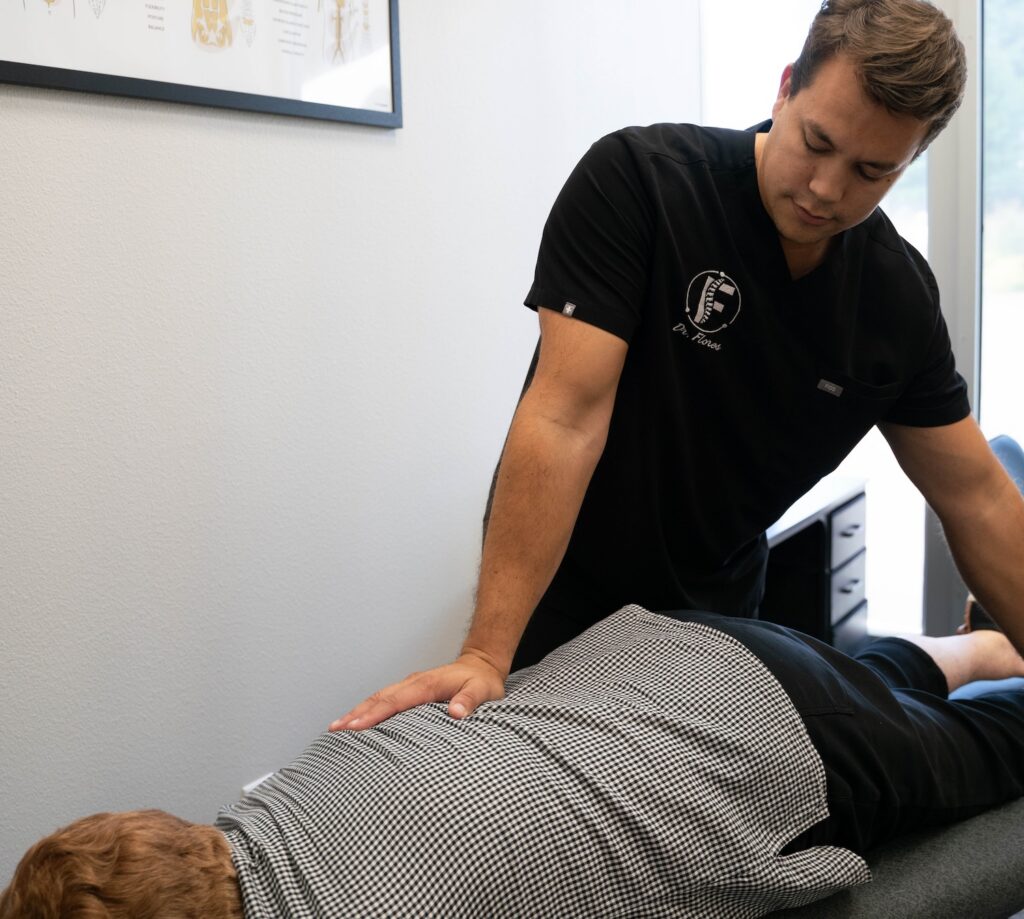
This is a precise, gentle, hands-on technique used to restore movement in a specific spinal joint. You may hear a small “pop,” which is simply gas releasing from the joint as pressure changes. The goal is better motion and less tension—not force.
Drop-table adjustments
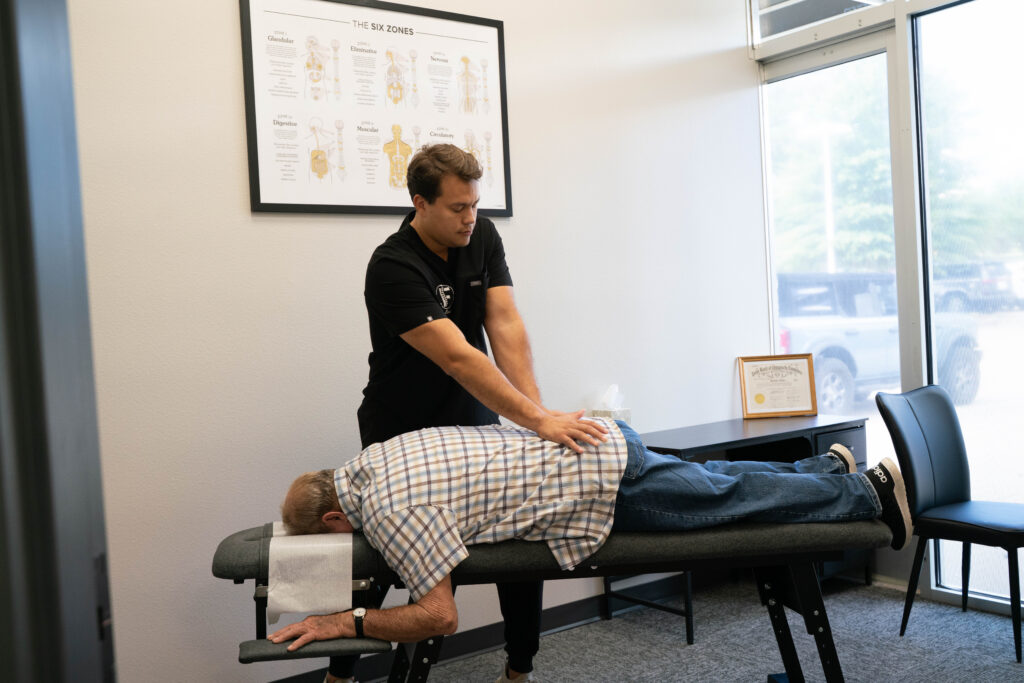
Portions of the table slightly drop as a controlled thrust is applied. The drop helps the adjustment occur with less effort and can feel very gentle. It’s useful for the pelvis, sacroiliac joints, and the lower back.
Instrument-assisted adjustments
We may use a handheld instrument to deliver a quick, precise impulse to a joint or soft tissue. It’s a low-force option that’s excellent for people who prefer very gentle care or for sensitive areas.
Flexion-distraction
This technique uses a specialized table to create a comfortable, rhythmic traction and flexion of the lower back. It can reduce pressure in the joints and is often helpful when bending or sitting has been painful.
Sacroiliac (SI) and pelvic techniques
When the pelvis isn’t moving well, the lower back often overworks. We use targeted, gentle adjustments—and sometimes pelvic blocking—to balance motion between the sacrum, ilium, and lumbar spine.
Soft-tissue work to support the adjustment
Tight or overactive muscles can tether a joint. We may add light myofascial work or stretch techniques to help your adjustment “hold” and feel more natural as you move through your day.
What You May Feel During and After an Adjustment
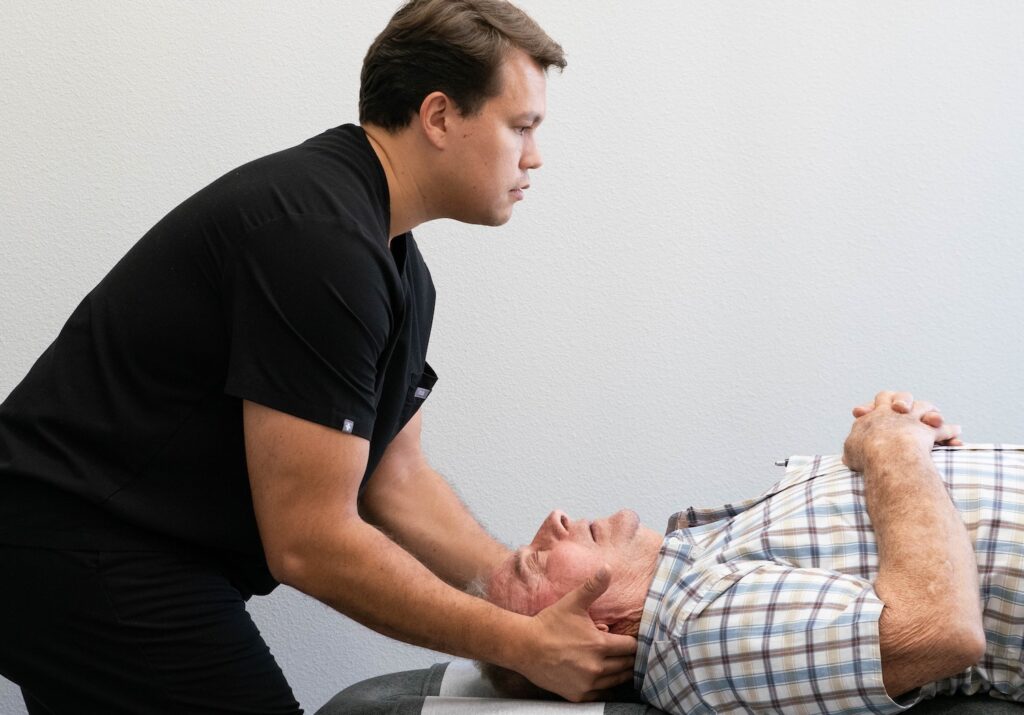
During an adjustment, you’ll feel directed pressure, a gentle stretch, and often an immediate sense of ease. If you hear a pop, that sound is a normal joint “cavitation,” not bones rubbing together.
Afterward, many people feel lighter, looser, or more mobile. It’s also common to feel mild soreness for 24–48 hours, similar to how you might feel after starting a new workout. Hydrating, taking a short walk, and staying gently active usually helps.
Some changes are immediate; others build visit by visit. We track your progress and steadily tailor your plan as your body responds.
Why Alignment Matters: Simple Biomechanics
Your spine is a column of movable joints designed to stack, bend, and rotate smoothly. When one joint stiffens, nearby joints compensate and move too much. That imbalance can lead to irritation, muscle guarding, and recurring pain.
Chiropractic adjustments restore normal motion in the right places. When joints move the way they’re supposed to, muscles coordinate better, pressure on sensitive tissues can decrease, and your body’s movement patterns become more efficient.
Major health organizations include spinal manipulation among recommended conservative options for many types of back pain, reflecting its role as a frontline, noninvasive approach (American College of Physicians guideline). Research also indicates spinal manipulation is generally safe when performed by a trained chiropractor, with rare adverse events (NCCIH overview).
Myths vs. Facts About Back Adjustments
Clear information helps you feel at ease. Here are common misunderstandings we hear in the clinic—and what the evidence and experience actually show.
| Myth | Fact |
|---|---|
| “Adjustments hurt.” | Most adjustments are comfortable and relieving. We match the technique to your tolerance and need. |
| “My bones are being cracked back into place.” | The pop is gas releasing from a joint as pressure changes. We’re restoring motion—not forcefully moving bones. |
| “Once you start, you have to keep going forever.” | Care is individualized. Many patients choose periodic checkups because they feel and function better, not because they must. |
| “Chiropractic is only for severe pain.” | It helps with everyday stiffness, posture strain, and prevention, as well as acute or recurring back pain. |
Practical Ways to Support Your Results
Small daily choices make adjustments work even better.
- If you sit for work, stand up every 30–45 minutes for a brief lap. Those micro-movements keep joints nourished and reduce stiffness that accumulates through the day.
- Set up your workstation so your eyes meet the top third of your screen, your shoulders feel relaxed, and your hips and knees are near ninety degrees. Keep your keyboard close to avoid reaching, and let your chair support the curve of your lower back.
- Sleep on your side or back with a supportive pillow. Side sleepers often feel better with a pillow between the knees to keep the pelvis neutral. Back sleepers can place a small pillow under the knees to ease the lower back.
- When lifting, keep the item close, hinge at the hips, and engage your core before you move. Slow, steady walking most days of the week also keeps your spine happy and your circulation strong.
When to See a Chiropractor for Back Pain
If your back pain has lasted more than a few days, keeps coming back, or limits your daily activities, a chiropractic evaluation is a smart next step. Early care can prevent a small problem from becoming a bigger one.
Signs you may benefit include morning stiffness that takes a while to “warm up,” discomfort with sitting or standing too long, pain after yard work or lifting, or a sense that your back “catches” with certain movements.
Here in Flint, TX, we see patterns tied to real life—commuting on TX-155, weekend projects, lake days, school sports, and long hours on devices. If those sound familiar, we can help you move comfortably through all of it.
Safety, Red Flags, and When We Refer
Chiropractic is not emergency care. Certain symptoms mean you should seek urgent medical evaluation rather than chiropractic first. Red flags include:
- New or worsening numbness in the groin (saddle area)
- Loss of bowel or bladder control
- Unexplained fever
- History of significant trauma
- Unexplained weight loss
- Progressive leg weakness
If we find signs that suggest a condition outside chiropractic scope or requiring additional testing, we’ll coordinate an appropriate medical referral. Your safety always comes first, and clear communication is part of our standard of care.
How Care Plans Work at Flores Chiropractic
Your plan is tailored to your goals and how your body responds. Many people start with an initial phase focused on calming pain and restoring movement. As you improve, we reduce visit frequency and emphasize strength, mobility, and habits that help you maintain results.
We recheck progress regularly and adjust the plan as needed. You’ll know where you stand and why we’re recommending each step. Some patients choose periodic wellness visits because staying ahead of stiffness and strain helps them feel and function their best.
Our Local Approach in Flint, TX
Life in East Texas keeps you moving—from projects around the house to time on Lake Palestine. Our approach is practical and personal. We listen, we examine, and we deliver focused chiropractic adjustments that fit your day-to-day life.
At Flores Chiropractic, chiropractic care is the frontline for back pain. If you’re ready to understand your back and take the next step, we’re here to guide you with clear answers and a plan that makes sense.
FAQs
Is the popping sound necessary for an adjustment to work?
No. The sound is just gas releasing inside the joint. Effective adjustments can occur with or without a pop.
Are chiropractic adjustments safe?
When performed by a licensed chiropractor after a proper exam, spinal adjustments are generally safe. We always match technique to your needs.
How long does a back pain adjustment take?
The adjustment itself is brief. Your visit includes assessment and any supportive care, so total time will vary based on your plan.
Will I need X-rays?
Not usually. We consider imaging only when your history and exam indicate it would change your care or rule out other issues.
Can I get adjusted if I’m pregnant?
Yes, with pregnancy-safe techniques and positioning. We tailor care for comfort and safety at each stage.
How quickly will I feel relief?
Some people feel better right away, while others improve steadily over several visits. We track progress and adjust your plan accordingly.
TL;DR Summary
- Chiropractic back pain adjustments restore normal joint motion to reduce irritation and improve movement.
- You may hear a harmless pop during some techniques; comfort and precision guide every adjustment.
- Expect a thorough exam, a plan tailored to you, and clear communication at each step.
- Daily habits—movement breaks, sleep support, and smart lifting—help your results last.
- Seek urgent medical care for red flags like bowel/bladder changes, saddle numbness, fever, or major trauma.